







Uniquely Sarawak
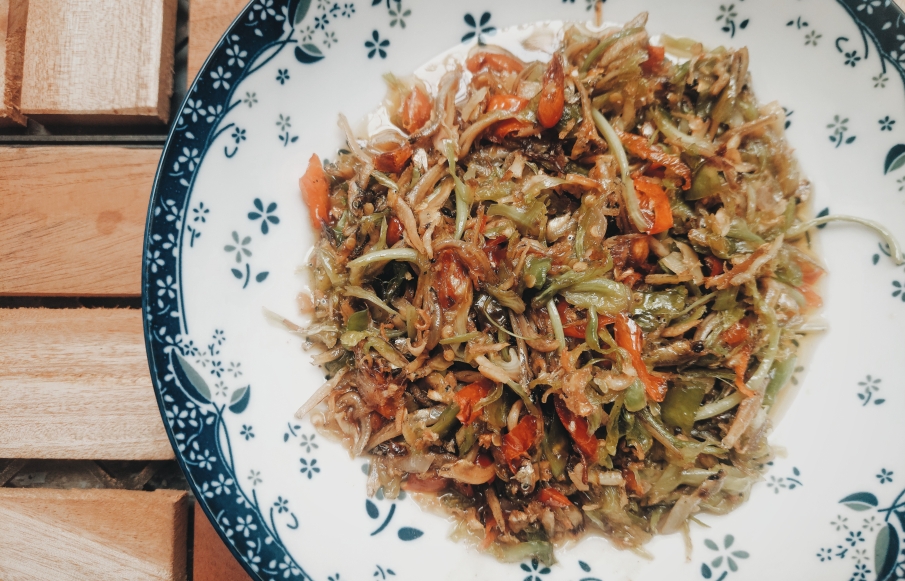
Sambal Tumis Bunga Kantan
Stir-fried torch ginger flower sambal
Sarawak is blessed with verdant evergreen jungles that host an astonishing diversity of herbaceous plant life. Amid towering trees and surrounding shrubs, they flourish in forms both familiar and extraordinary. While not all of them are edible, those that are have long found their way into local kitchens, especially in villages and, in today’s case, homes of many Sarawakians who have taken a liking to these prized ingredients from nature’s pantry.
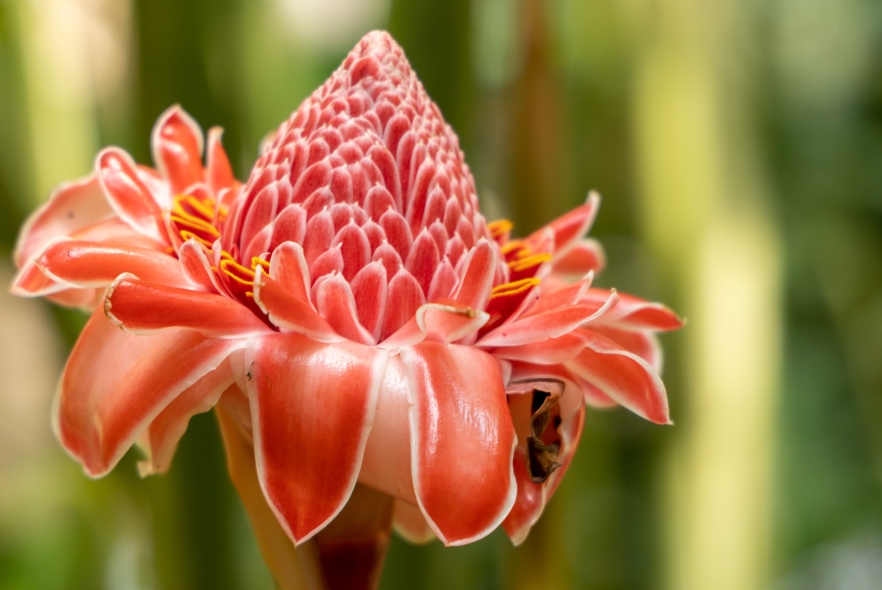
One of these edibles is an exquisite bloom that can be found growing near water sources such as the rivers and streams in the jungles of Sarawak. The Etlingera elatior, better known as the torch ginger, or bunga kantan as it is lovingly known across the Malay Archipelago, stands out amid a lush green surrounding. Native to the equatorial rainforests of the region, this perennial plant is a member of the Zingiberaceae family, a group that includes familiar spices such as ginger, turmeric, and galangal.
As far as appearance goes, the bunga kantan, also known as kechala by the Iban folk, dazzles with grandeur. Its form almost architectural, with straight, spear-like stalks that thrust skyward from a mass of muscular shoots, standing flover the forest flowers. These stems, thick and green like those of a sugarcane plant, give way to exquisite flower buds of pink and red hues, almost resembling a fi e torch in both colour and shape.
When fully open, the bloom can be described as a marvel of symmetry. Its waxen bracts spiral outward in a perfect Fibonacci sequence. The fl head is large, almost otherworldly in appearance, with each one composed of up to 345 fl ets (tiny blossoms within a blossom). There’s nothing subtle about this fl . It is, quite simply, opulent and it demands attention.
But in the case of the bunga kantan, and not intending to sound cliché, there’s more than meets the eye. Carve into it and out comes a certain scent that is hard to ignore: floral, citrusy, with a sharpness reminiscent of ginger and the clean brightness of lemongrass. The fragrance lifts from the petals like morning mist from a jungle stream… cool, fresh, and refreshing. With such spell-binding aroma and complex flavour profile, it is no surprise then that bunga kantan is widely used in local cooking here in Sarawak.
The Medicinal Properties of Bunga Kantan
Like many other herbaceous plants, bunga kantan is jam packed with medicinal properties. It is, quite simply, nature’s pharmacy hidden in plain sight. Its leaves, rhizomes, flowers and fruits have been used as medicine for generations – passed down through oral tradition long before the advent of lab coats and research journals.
Today, science is beginning to validate what rainforest wisdom has long proclaimed. Each petal contains a cocktail of bioactive compounds, including fl phenolics, polyphenols, and saponins. These are some of the molecules that promote healing. In laboratory studies, extracts of bunga kantan have demonstrated impressive antioxidant properties. It is found to be capable of neutralising free radicals and reduce oxidative stress. These same compounds possess antimicrobial properties that are effective against harmful bacteria and fungi.
Scientific discoveries have also revealed its extraordinary potential as a natural cancer-fi agent, with research by Habsah et al. (2005) showing its remarkable tumour-inhibiting activity of up to 92.18%. Further studies by Ghasemzadeh et al. (2015) demonstrated its ability to suppress breast cancer cell lines (MCF-7 and MDA-MB-231), while Krajarng et al. (2017) found that its extracts selectively induced cell death in melanoma cells without harming healthy tissue. More recently, Al-Mansoub et al. (2021) highlighted its cytotoxic effects against colorectal cancer cells, which suggested that it could possibly prevent, delay, or reverse cancer development.
Nutritionally, the flower is unassuming but potent. A 100-gramme serving offers 40 kilocalories, alongside 5.5 grammes of carbohydrates, 1.6 grammes of protein, and 1.3 grammes of fat. It is rich in potassium (453 milligrams), calcium, iron, and other trace elements that support cardiovascular health and cellular function. Most notably, its fibre content, especially in dried form, can reach up to 17%, therefore making it an effective agent in lowering LDL cholesterol and promoting digestive health.
Traditionally, bunga kantan is used to treat a variety of ailments. Reboiled fl buds are consumed as natural tonics for diabetes and high blood pressure. Crushed leaves are pressed onto open wounds to allow their antimicrobial properties to accelerate healing and prevent infection. Postnatal women bathe in bunga kantan infused water to eliminate body odour and restore balance. Even earaches are treated with a few gentle drops of torch ginger water.
The flower is also associated with beauty and longevity. Traditional belief states that regular consumption or topical application of bunga kantan can slow the signs of ageing, brighten complexion, and preserve youthful energy. It’s nature’s answer to the cosmetics aisle.
Meanwhile, small, ruby-hued fruits of the bunga kantan are rich in antioxidants. Sometimes eaten as ulam (local salad) or infused in warm water to extract its essence, the fruit is regarded as a stamina booster for men, thanks to its ability to increase vitality and energy, especially when consumed regularly.
The plant’s magic extends to the air we breathe. By this, we refer to the scent of bunga kantan, which when burned or infused in bathwater, is said to be able to cleanse the body and spirit. Think of it as a botanical sage used to ward off bad energy and call forth clarity. Even to take a whiff of the torch ginger flower as you walk through a morning market is a refreshing experience. Its intoxicating aroma will have you in a trance, imagining all the wonderful dishes you can whip up in the kitchen with it. And before you know it, you’re digging into your wallet for money to pay for a bundle of bunga kantan.
Bunga Kantan in Sarawak Cooking
In Sarawak, bunga kantan is one of many signature ingredients that make up the region’s complex, layered cuisine. It is present in a wide array of traditional and contemporary dishes and is used in everyday cooking in many households.
It is, by all means, not exclusive to Sarawak. It does also grow elsewhere in Malaysia and Thailand. It’s the way it is used that brings out its uniqueness. Here, the fl becomes a culinary muse. In the hands of those both seasoned and new, it fi its way in recipes passed down through generations and in bold, modern reinterpretations of traditional favourites.
Its flavour is rather tricky to describe precisely. There is a floral lift but not perfumed like rose or jasmine. Instead, it offers a crisp, citrusy brightness with a slightly spicy, herbaceous bite. There’s also an earthy depth to it that transports you to the jungle from whence it originated.
Traditionally, bunga kantan is used in dishes like sambal bunga kantan, where it is stir-fried with anchovies, chilli, onion, and belacan (fermented shrimp paste), and kerabu bunga kantan, which is raw bunga kantan tossed with lime, onion and chilli in a salad that jolts the senses awake.
Though not essential, the flower’s inclusion in dishes like pansoh manuk (chicken cooked in bamboo) adds an unexpected layer of aroma and flavour that harmonises with e smokiness of the bamboo and the richness of the meat. Likewise, in daun ubi goreng (stir-fried tapioca leaves), it lends a brightness that cuts through the dish’s earthiness.
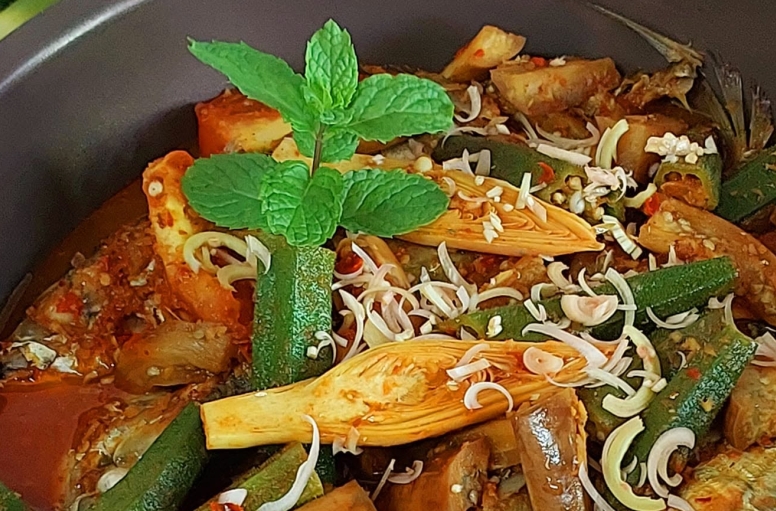
Some add it to classics like asam pedas, where its floral sharpness plays against the tang of asam jawa (tamarind) or asam keping (tamarind slice) and the richness of fish. Even the humble nasi goreng (fried rice) is transformed, where the flower’s aroma and texture add intrigue to each spoonful. An unexpected way of using it, as we have personally witnessed, is its addition into the sauce for mee jawa, a comforting noodle dish with a mildly spicy sweet potato-based sauce. Very interesting indeed.
Another interesting dish is stir-fried belacan chicken, which is simply chicken stir-fried together with aromatics and belacan. Bunga kantan is added to enhance the overall dish in terms of both flavour and aroma.
A Treasured Bloom
In summation, bunga kantan is no ordinary plant. It is a botanical treasure prized for its electrifying presence in the kitchen as well as its host of health benefits and time-honoured medicinal properties.
Though it grows naturally in the wild, bunga kantan can also be cultivated with relative ease. With its striking architecture and bold colour, it makes a breathtaking addition to any tropical garden, transforming your backyard into a mini rainforest.
For the home cook or curious gastronome, bunga kantan is a familiar sight at farmers' markets, especially within the jungle produce section, where it can be easily detected thanks to its distinctive appearance. It is also stocked in some local supermarkets, where it is displayed alongside lemongrass, turmeric, and other staples of the region's aromatic palette.
And oh, the dishes it inspires, from the more traditional kerabu to innovative ones like stir-fried belacan chicken, the bunga kantan is the star ingredient in the former and a sensational co-star in the latter.
That being said, if you’ve never tasted bunga kantan, we recommend you do so, given the chance. Let its flavour surprise you and its fragrance enchant you.
To begin, may we suggest a timeless favourite, sambal tumis bunga kantan, a stir-fried dish that captures the flower’s satisfyingly floral and spicy personality.
Sambal Tumis Bunga Kantan Recipe
Ingredients:
- 2 stalks bunga kantan (torch ginger flfi sliced (you may also pound them in a pestle and mortar if you like)
- 1/3 cup dried anchovies (ikan bilis), rinsed and drained
- 1/2 medium red onion, thinly sliced
- Cooking oil
To blend:
- 2 large red chillies, deseeded if preferred
- 6-8 bird’s eye chillies (adjust to desired heat level)
- 1/2 medium red onion
- 3 shallots
- Salt to taste
- Sugar to taste
Cooking Method
1. Heat about 3–4 tablespoons of cooking oil in a wok and fry the anchovies until golden and crispy. Remove and set aside.
2. In the same wok, stir fry the spice blend. Add more oil if needed. Sauté until fragrant and the oil begins to separate from the mixture. Add water bit by bit occasionally to keep it from sticking.
3. Stir in the onion and cook until soft.
4. Mix in the fisliced bunga kantan. Season with salt and sugar to taste. Add a bit of water if the sambal dries up and continue cooking until the bunga kantan softens slightly and the sambal has a rich, thick consistency.
5. Turn off the heat and stir in the fried anchovies.
 Gastronomy Cities
 Amazing Food
 Chef's Talk