



Global Travel News
The High-Altitude Oracle: Davos as the Global Command System
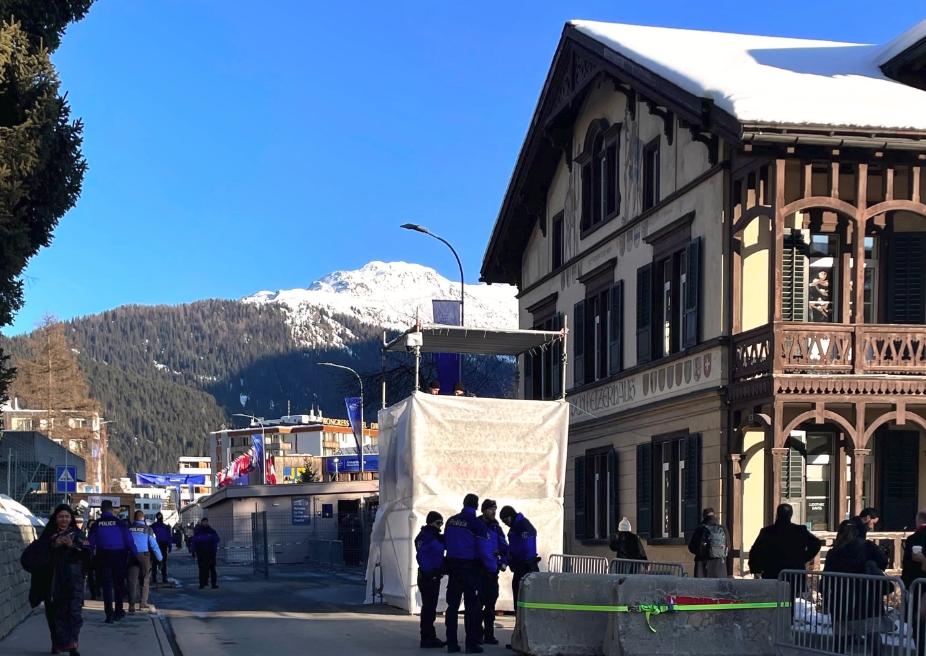
Yet somehow it feels an improbable setting: the winding roads climbing up are single lane, the trains run on a narrow gauge of 1,000 millimeters, and some older hotel rooms are as small as 12 square meters. Why Davos?
A rare identity evolved over 100 years
Becoming the WEF’s hub was not accidental. The Alpine town entered the broader public imagination through literature. In 1924, Thomas Mann published The Magic Mountain, the novel that transformed Davos from a tuberculosis sanatorium into an “idea incubator.” Mann’s protagonist, Hans Castorp, arrived in Davos for a three-week visit, but stayed for seven years, drawn into a world where illness, philosophy, and time itself seemed suspended.
Mann, who later won the Nobel Prize, described Davos’s fog and thin air as a kind of high-mountain consciousness—a place where thoughts sharpened and the world’s fate debated. It was a space that stimulates intellectual, cultural, and spiritual capital.
WEF’s founder, Klaus Schwab, a German business scholar, believed that “environment matters.” He chose Davos precisely because mountains in Swiss and German culture symbolize retreat, clarity, and perspective. The municipality’s scale—small and casual enough for chance encounters, enclosed enough for security—reinforces the Forum’s belief that dialogue requires both openness and containment.
Five decades later, the book’s metaphor remains uncannily resonant: the sanatorium debates echo in the WEF’s agenda sessions; the mountain solitude has become a stage for global cooperation and disagreement.
Walking through the streets of Davos during WEF week, one feels the interplay between global urgency and alpine calm. Mornings begin early: newspaper vendors hand out special editions of the Financial Times and other titles; boots click on the pavement as delegates move between venues; helicopters thrum near and far; and the mountains remain still. Together, they form the peculiar atmosphere that has long made Davos the inevitable home for Schwab’s vision.
The second focal battlegrounds—“Houses”
If the Congress Centre is the brain of the WEF, the Promenade is its marketplace. This main street undergoes a feverish metamorphosis, when roughly 150 storefronts are “colonized” to become identity “Houses”, transforming the Promenade into a corridor of national pavilions, corporate showcases and NGO hubs. Inside the Houses real partnerships are formed and capital moved.
The economics are eye-watering: Local shopkeepers vacate their premises and leave Davos behind—the rent, it is said, approaches a year’s income.
The new “House owners” then turn these structures into workspaces of every kind. During the week, these Houses become dense, fast-moving hubs—arguably the Forum’s most active marketplace for projects and deals.
Many Houses are restricted to internal activities and invitees. Inside, warm air mixes with the aroma of espresso and national treats, alongside intense networking. A young investment banker from Zurich, energetic and stylishly dressed, whispered to me, “I only need to find one prince.” He commutes more than six hours daily by train between Zurich and Davos, “treasure-hunting.”
Outside the “AI House”, a long queue seemed permanent—people hoped to hear from tech prophets. At the South African House, I joined two ministerial roundtables on tourism and investment. The Indonesian House displayed bold figures: “Nickel, World No. 1; Cobalt, World No. 3; Solar, 3,294 gigawatts (99.79% undeveloped)…” Nearby, at the CNBC pavilion, the American financial broadcaster hosted Matt Damon alongside agenda-setting CEOs and influencers.
I visited four Indian Houses—undoubtedly the most kinetic. Indian public and private sectors joined forces in a frenzy of investment promotion. In the “WeLead Lounge,” former minister Smriti Irani pitched a $100 million fund to support 100,000 Indian women entrepreneurs, backed by the Gates Foundation. In just 48 hours, it raised $2 million.
This is the “House Economy” in its purest form: capital flows in motion while WEF’s formal plenary sessions unfold a kilometer away.
Hosting WEF: order and friction
Behind this marketplace of ideas lies a machinery of order—and friction.
Order in the Alps is expensive. The Swiss Army’s WEF security mandate includes an annual federal budget of 32 million Swiss francs, with up to 5,000 soldiers to be deployed to the canton of Graubünden through 2027. Airspace is restricted, surveillance heightened, and the town’s narrow streets are threaded with checkpoints separating public areas from the core security zone.
For local authorities, WEF hinges on a massive logistical undertaking. Beyond venues, this involves a meticulous choreography of street stalls, transport, fire prevention, power, water, waste disposal, and outdoor food stands’ infrastructure. There is no room for error.
Take the Houses as an example. To manage their rapid growth, the municipality introduced new regulations to streamline approvals, construction, and logistics. This framework allows the Houses ecosystem to scale while remaining aligned with the Forum’s broader operations and Davos’ governance structure.
Yet the friction is real. One resident grumbled about his daily trek across town because his bus route was suspended. An 11-year-old boy, clutching free Qatari Regag bread from a street stall, replied to me, “No, I don’t like WEF—all the fun places are closed.” Then he broke into an apple-cheeked grin, waving the bread in both hands: “But I like these! One week a year? I think I can do it.”
This is the Davos compromise. A week of distortion—sandwiches soar to $20, and hotel packages start at $20,000. A middle-aged Swiss couple told me they had always been skeptical, believing the government spent too much on WEF. They came to see it for themselves and were pleasantly surprised by the global showcases. I said to them, “Think of the billions of media impressions Davos gets for free. It’s the kind of tourism promotion any country would want, don’t you think?” They paused, then nodded.
And then there was M.B., a Swiss lady I met at the train station who worked at one of the Promenade Houses. On my last night, she invited me to her home for a homemade Swiss dinner. We talked for five hours; she played the piano, and I sang. After a week of intense agendas, she was the quiet counterpoint, reminding me of the fundamental reasons why humans come together in the first place.
Public opinion carries significant weight. The Davos municipal website explicitly stated that the local administration’s chief objective is to “meet the needs of permanent residents and guests alike, while accounting for various commercial interests.” It is a concise summary of the delicate balancing act between commerce, community, and visitors. Regarding WEF, the website notes: “Until 2024, the municipality of Davos contributed 1.125 million Swiss francs (per year, noted by author) to the security costs. This funding falls under the authority of the voting population, which is why residents can express their views on the WEF in public referendums.”
The numbers back the sentiment. A study by the University of St. Gallen found that in 2023, WEF generated 69 million Swiss francs in direct and indirect income for Davos, and 181 million francs for Switzerland as a whole, added 11.6 million francs to the Swiss tax coffers.
Davos: from sanatorium to global symbol
As the geopolitical sensitivities intensify, coupled with scale that tests Davos’ capacity, WEF leadership has considered rotating or relocating locations. The Forum already convenes globally—from China’s “Summer Davos”, first edition in 2007, to Saudi Arabia’s Future Investment Initiative—the so‑called “Davos in the Desert” launched in 2017.
Still, something about this quiet valley remains magnetic. Its geography fosters proximity; its governance enforces order; its literary past invites reflection. Davos did not merely host the Forum—it shaped its temperament. The Forum, in turn, carries traces of Davos—an altitude-induced clarity.
For visitors, Davos offers more than policy debates. The “Thomas Mann Way” leads to the sanatorium that inspired The Magic Mountain. The railway line south crosses a 120‑year‑old UNESCO‑listed bridge, a marvel of engineering that still operates with efficiency. The mountains, the bridge, the sanatorium—all remain remarkably unchanged, as if time moves at a different cadence here.
Yet the region is far from static. In 1934, the world’s first ski lift went into operation here, and Davos-Klosters has since grown into one of the Alps’ most hospitality‑dense corridors, with more than 80 hotels and over 140 restaurants. Mountain huts serve rösti and hot chocolate to summer hikers and winter skiers, while boutique chalets offer quieter luxury. “Mountain Hotels” add thousands of beds for athletes, families, and weekend wanderers. It is where high‑altitude culture meets high‑altitude comfort—an unlikely pairing that has become Davos’s enduring charm.
The Davos tourism department is publicly funded with 53 employees. The office is located directly adjacent to the Congress Centre. It promotes the region in partnership with the neighboring town of Klosters. Unlike the public-private hybrid tourism promotion entity, this office has financial stability and can provide service continuity year after year.
The Alps will remain. The trains will return. And at altitude, thinking never feels quite the same.
 Haybina Hao reporting for Travelindex. She is an international travel journalist and analyst whose work spans destinations, global tourism trends, and cross cultural storytelling. She reports in both English and Chinese.
 Gastronomy Cities
 Amazing Food
 Chef's Talk