











Global Travel News
CES Opens a New Era for International Travel Innovation
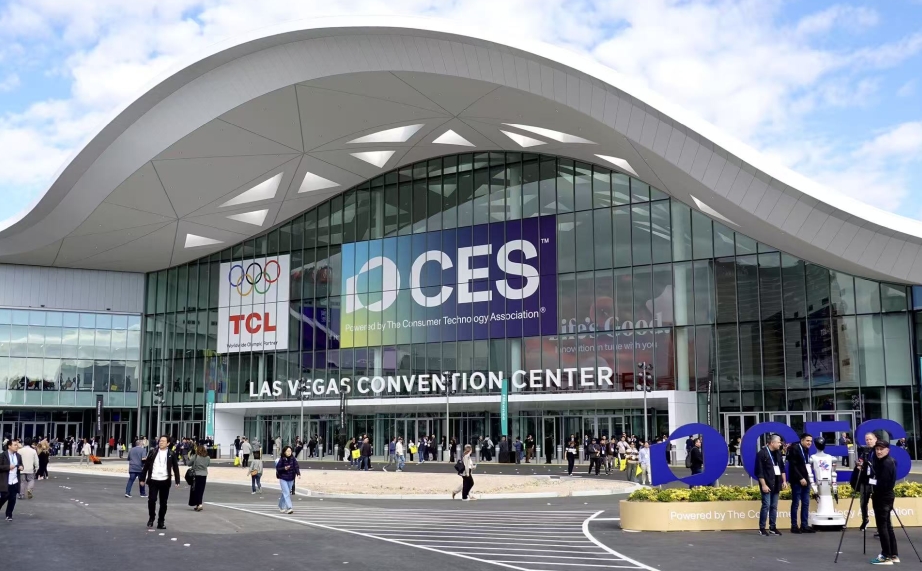
For the first time, CES introduced the Travel & Tourism category in the CES Innovation Awards. The light blue glass trophies blended quietly among the heritage categories. They didn’t dominate social feeds, yet their implications reach far beyond the show floor. With this move, CES effectively declared that travel is no longer just an “application scenario” for technology — it is becoming a technology industry in its own right.
A Shift in How Travel Innovation Is Defined
The three inaugural winners share something important. None are consumer gadgets or booking tools. All operate at the infrastructure level, addressing the systems that determine how people move, connect, and experience the world.
For years, travel tech has been defined by distribution platforms, personalization engines, loyalty apps, and digital marketing tools. CES is signaling a different future — one where innovation is measured not by convenience, but by coordination and system integration.
Inside the Oshkosh Pavilion: An Award for Safety, and a Vision for the Future Airport
The 110-year-old Oshkosh Corporation of the U.S. won the CES award for its Striker Volterra electric airport fire truck, a next-generation ARFF vehicle designed to improve emergency response with lower emissions and higher operational efficiency.
But at the Oshkosh pavilion, I was drawn to a three-minute video playing under the banner “AIRPORT OF THE FUTURE.” It stitched together a broader ecosystem of electric ground vehicles, autonomous systems, and robot-enabled operations — all contributing to an efficient “Perfect Turn.”
I asked Jennifer Stianson, Vice President of Global Branding and Communications, “How do you convince airports — and the FAA — to adopt these new technologies in one of the world’s most risk-averse environments?”
She responded: “Airports have long been asking for these technologies. They want more efficiency, better accident prevention, and more human-centered operations. We’re in active discussions with the FAA and have received encouraging feedback.”
Some of the equipment featured in the video is already in use by Oshkosh clients. The company is not focused on futuristic concepts, but on operational systems that can be deployed in real-world conditions.
Travelers rarely think about the choreography behind a flight departure: the timing of the jet bridge, the synchronization of power units, the coordination of tugs, loaders, and safety checks. Yet these unseen systems determine whether a flight leaves on time, whether connections are made, and whether the airport experience feels seamless or stressful. Oshkosh’s video quietly reminded viewers that travelers feel the impact of systems they never see.
At the Even Realities Pavilion: Tourism as Enhanced Perception
Even Realities, a Hong Kong SAR–based company, offered a very different window into the future of travel. I tested their G2 smart glasses, which overlay real-time contextual information with surprising precision. The device is not a consumer toy; it is designed for airports, museums, and destinations that want to make information more accessible, especially for travelers with mobility or cognitive challenges.
When I spoke with Nikolaj Schnoor, Chief Strategy Officer, he noted that Even Realities had submitted their technology to multiple CES categories. “CES chose to recognize us in Travel & Tourism,” he said. He explained that the company’s work is fundamentally about helping people navigate and understand the world around them.
That framing matters. It suggests that CES sees tourism innovation not as entertainment, but as enhanced perception — a way to make destinations more legible, inclusive, and data-rich.
At a Korean Booth: Mobility with Global Reach
The third award winner, LBS Tech from South Korea, had a humble booth — yet the technology they showcased aims to solve one of travel’s biggest structural challenges: how people move through cities and campuses with clarity, safety, and real-time guidance.
LBS Tech uses AI to map walkway-level accessibility and design optimized pickup points, enabling inclusive, door-to-door mobility across cities and campuses. The system is already being piloted far beyond Korea, including universities in the United States (University of Rochester, University of Southern California), as well as Ho Chi Minh City in Vietnam and Birmingham in the United Kingdom. The company CEO, Mr. S.W. Lee, was busy receiving potential clients.
The contrast was striking: a modest booth representing a technology with global reach. It underscored a theme running through all three award winners — travel innovation is no longer defined by booth size or noise, but by the scale of the system it can transform.
Why This Moment Matters
Taken together, the award selections show CES view that travel innovation is shifting toward infrastructure, mobility, and system level coordination. It’s a narrative the travel and tourism industry has been slow to claim, despite its economic impact accounting for roughly 10% of the global economy. The sector has long been described as technologically fragmented, constrained by legacy systems and slow upgrade cycles.
The pandemic accelerated automation and contactless technologies, but the sector still lacked a global stage that recognized travel as a frontier of innovation. CES has now provided that stage, reframing travel tech from “front of house convenience” to “back of house intelligence.” The awards may have been quiet, but their implications are not: travel tech has entered the main arena of global innovation, and the question is whether the industry is ready to claim that space.
 Haybina Hao reporting for Travelindex. She is an international travel journalist and analyst whose work spans destinations, global tourism trends, and cross cultural storytelling. She reports in both English and Chinese.
 Gastronomy Cities
 Amazing Food
 Chef's Talk