





Chef's Talk
Chef Michele Bravo
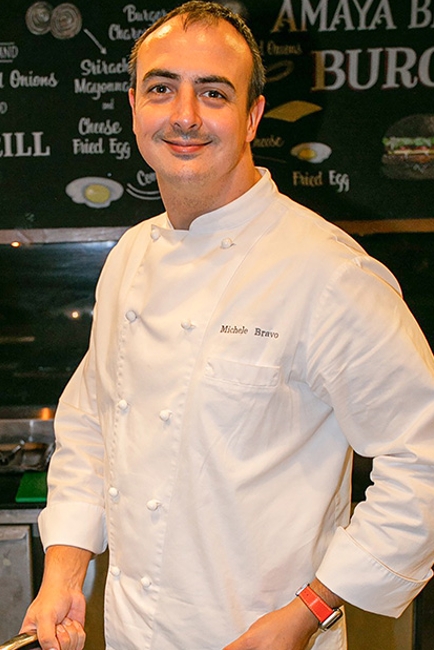 Chef Michele Bravo, Corporate Chef, ONYX Hospitality Group
Born in Brescia in northern Italy, Chef Michele Bravo discovered his love for cooking at just 15 years old, spending summers working in a traditional Italian trattoria near his hometown. What began as a seasonal student job quickly developed into a lifelong passion for the kitchen and the creativity it offered.
Now serving as Corporate Chef at ONYX Hospitality Group, with oversight of Prego Thailand, Michele brings decades of experience in authentic Italian cuisine, shaped by his upbringing, his years spent working across Europe, and his belief that great Italian food should remain honest, approachable, and full of flavor. From handmade pasta to comforting risottos, his cooking is rooted in simplicity, technique, and quality ingredients rather than unnecessary complexity.
With Prego continuing to expand across Thailand and Sri Lanka, Chef Michele remains committed to preserving the soul of classic Italian cuisine while adapting thoughtfully to local ingredients and modern dining expectations.
Was your decision to become a chef conscious or did you fall into it?
I started working in kitchens very early, when I was around 15 years old. In Italy, during the summer holidays, many students take seasonal jobs, and I spent those summers working in a small trattoria close to my home in Brescia. At the beginning, I wasn’t sure whether I wanted to work in service or in the kitchen, so I tried both.
Eventually, I realized that the kitchen suited me much better because it allowed me to create something. In the dining room, you create conversations and relationships with guests, which is important, but in the kitchen you create dishes, flavors, and experiences. That creative aspect is what made me choose this career.
Who were your biggest influences in pursuing a cooking career?
Nobody in particular pushed me into becoming a chef. It was very much my own decision. Of course, like many Italians, my love for food started at home and from family traditions, but no one specifically told me to become a chef.
I simply enjoyed cooking more than anything else. I was never interested in pastry because it feels too scientific for me. In cooking, you can improvise and adapt; there is more freedom and creativity.
What are some emerging food trends that you’re noticing?
Italian food continues to grow strongly around the world because it is very approachable and comforting. In Bangkok especially, many Italian restaurants have opened in recent years because people from many different cultures can easily connect with Italian cuisine.
Right now, guests are looking for more than just food. They want an experience. They want storytelling, authenticity, and a connection to where ingredients and dishes come from. At Prego, our focus is not on reinventing Italian food but on reconnecting guests with classic Italian flavors done properly.
What’s an emerging ingredient that you’re using a lot of these days?
Not really, because Italian cuisine is built around timeless ingredients. Fish is still fish, sea bass is still sea bass, and good vegetables are always important. Rather than constantly searching for new ingredients, I believe the real skill lies in understanding how to adapt classic ingredients into different recipes and combinations.
Personally, one ingredient I love working with is rosemary. It’s incredibly versatile. Most people associate rosemary with meat, but you can also use it in desserts, sauces, and even caramel preparations.
How easy or difficult is it to find the right ingredients for Italian cuisine in Bangkok?
Bangkok is actually one of the easiest cities in Asia for sourcing ingredients. You can find almost everything here. Most authentic Italian products are already imported into Thailand, so ingredients such as cheeses, cured meats, and specialty products are accessible. Of course, pricing can sometimes be another story, but availability is generally very good.
Thailand has also developed significantly in terms of local produce, especially vegetables from the north of the country. Some locally produced ingredients are now of excellent quality.
What would you cook at home if you were just making a laid-back dinner?
Probably carbonara. It’s one of those dishes I can always make because I usually have the ingredients at home.
For me, real carbonara is very simple: egg yolk, pecorino cheese, black pepper, and guanciale (traditional Italian cured meat made from pork cheek or jowl). No cream. Italian cooking is often about simplicity done properly.
Do you source as much local produce as possible for each restaurant, and does this have a big impact on the menu?
We use local ingredients where it makes sense. Eggs and vegetables can easily be sourced locally, but products like Parmigiano Reggiano or Pecorino Romano still need to be imported from Italy because the flavor profile cannot truly be replicated.
The balance is important. We try to combine authentic Italian ingredients with good local produce whenever possible.
Is there one dish that sums up your style?
It would probably be a risotto or a pasta dish. Those are the dishes where technique, balance, and flavor really matter. I especially enjoy mushroom risotto with Italian sausage. It’s comforting, rich, and deeply connected to northern Italian cooking.
Will any dishes you recently discovered be making their way onto your menus?
Yes. We recently introduced a gnocchi dish made with ricotta cheese, served with guanciale and pumpkin cream. It’s already available on the menu and reflects the kind of comforting yet flavorful Italian dishes we want to focus on.
Do you try out dishes on your family or friends?
My family is still in Italy, so it’s a bit difficult. Usually, I prefer receiving feedback from trusted colleagues and management teams inside the restaurants. At Prego, I often discuss new dishes internally before finalizing them.
How often do you change the menu at Prego?
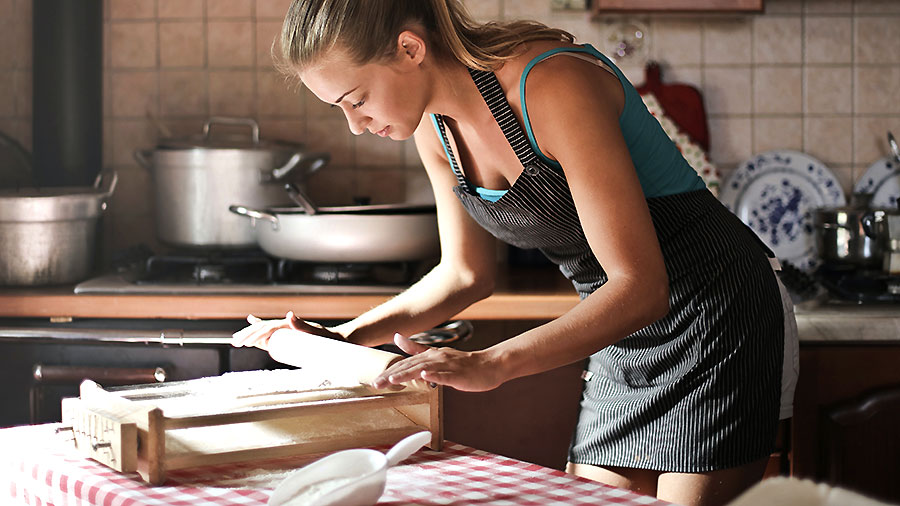
Usually once a year. We first look at which dishes are performing well and which ones are not moving. Then we study market trends and look at what ingredients are available. Right now, a major focus for us is fresh homemade pasta. We recently opened a new pasta lab at Prego Pattaya and are now producing most of our pasta fresh in-house.
Fresh pasta is important in Italian cuisine because freshness changes everything. Different pasta shapes also work better with different sauces. For example, seafood sauces work very well with larger pasta shapes because the sauce can enter the pasta and create more flavor. Italian cuisine is very thoughtful when it comes to matching the right pasta with the right sauce.
Do you serve vegetarian dishes?
Of course. Many traditional Italian dishes are naturally vegetarian already. Pasta pomodoro, pizza Margherita, and many vegetable-based dishes are classic examples. Sometimes the simplest dishes are the most authentic.
What are your customers’ most frequently requested dishes?
Risottos perform very well, and pasta dishes with Bolognese sauce are always popular. Overall, guests continue to look for comforting and familiar Italian flavors.
What do you think the most important qualities are in a young chef?
Passion, patience, and the willingness to learn. Young chefs should not expect immediate success. Cooking takes time. You learn by observing other chefs, accepting criticism, and constantly improving yourself.
One of the most important things in the kitchen is to keep looking around and observing how other people work, not only focusing on your own station.
What do you think about chefs like Gordon Ramsay, who have taken haute cuisine to the masses via reality TV?
In some ways, it’s positive because it introduces cooking and restaurant culture to a wider audience. At the same time, television sometimes mixes entertainment with authenticity in ways that can blur the true identity of a cuisine.
Certain concepts become more about business and marketing than about preserving authenticity. For me personally, authenticity is very important.
Can you name some famous people you’ve cooked for?
Over the years, I’ve cooked for actors, politicians, and football players, especially during my time in Italy. But honestly, I’ve never been someone who remembers celebrity names very well.
What’s the one cooking tool a chef should never be without?
A good knife. With the right knife, you can do almost everything in the kitchen, from butchery to very delicate preparation work.
What’s the best advice you’ve ever been given?
Never stop learning. One of the chefs I worked with told me this when I was very young: never feel like you’ve already arrived. Keep studying, keep learning new techniques, and keep understanding how the industry evolves. That advice has stayed with me throughout my entire career.
What are your favorite restaurants in Bangkok?
One of my favorites is iO Italian Osteria in Sukhumvit 31 because the food feels truly authentic. I appreciate restaurants that don’t compromise flavor simply to follow trends or become more commercial. The dishes there remind me of the real flavors you find in Italy.
What is your favorite holiday destination?
I prefer discovering somewhere new every time. I enjoy traveling to different countries, exploring different cultures, and especially trying different food. I also prefer mountains more than beaches because I grew up close to the mountains in northern Italy and used to enjoy rock climbing.
What’s next for you (plans, dreams, …)?
Prego is continuing to expand. We are opening two additional branches, which will bring the total to six Prego locations in Thailand, plus one in Sri Lanka.
The goal is for Prego to become recognized not simply as a large Italian restaurant brand, but as a destination for authentic classic Italian food, especially for fresh pasta and honest Italian flavors. For me, preserving authenticity will always remain the priority.
 Gastronomy Cities
 Amazing Food
 Chef's Talk